
If your car door won’t open from either side, don’t panic. Stay calm and look for a simple solution. Many Car door issues happen because of problems like a failed automatic lock, a broken handle, or electronic handle trouble. You can often find a solution without much stress. Just follow easy steps, and you may fix the car door yourself. With a little patience, you’ll feel more confident tackling these problems.
Table of Contents
Key Takeaways
Always think about safety first when a car door is stuck. Learn how to use the manual release. Keep an escape tool close by in your car.
Try easy ways to open a stuck door first. Use your car’s app or try the manual key. Do not force the lock or you might break it.
Take care of your car often. Clean and oil the door locks and hinges. This stops rust and sticking, especially in cold weather.
Watch out for common car door problems. These include jammed latches or broken actuators. Finding these problems early can stop bigger issues later.
If you cannot fix the door, call a mechanic for help. Strange sounds or trouble opening the door mean you need a pro.
Quick Actions for Stuck Car Door
Safety First
When you realize your car door is stuck, take a deep breath. Safety comes first. Before you try to fix anything, make sure you and your passengers are safe. If you feel trapped, call 911 and follow the dispatcher’s instructions. You should know where the manual release is for your car door. Most vehicles have a mechanical lever or cable you can pull if the electronic system fails. Teach your family, especially kids, how to find and use these releases. Practice the motion so everyone feels confident in an emergency.
If you can’t open the rear doors, try the front doors. Use hazard lights or the horn to signal for help if you need it. Keep an escape tool in your car. This tool can break a window if you ever get stuck inside, but remember that modern glass can be tough to break. Always check your owner’s manual for the location of manual releases and emergency exits.
Tip: Work slowly and gently when you try to open a stuck door lock. Rushing can damage the lock or the electronics.
Basic Unlocking Steps
You can try a few simple steps to unlock a stuck car door. Start with the easiest solutions first. Here’s a quick list to guide you:
Use your vehicle’s app to restart the system. Sometimes, a software glitch causes a stuck door lock.
Try the manual override. Use your physical key to unlock the car door. If your car has keyless start, check the manual for special instructions.
Insert a plastic or rubber wedge between the door and frame. This creates a gap so you can reach inside.
Use a long-reach tool to press the unlock button or pull the handle from inside.
If you suspect a stuck door lock, avoid forcing the mechanism. Keep your manual key handy for emergencies. Work gently to protect the weatherstripping and electronics. If you notice a silent actuator, loose latch cable, or visible handle issues, you may need to repair or replace those parts. Sometimes, cleaning or lubricating a rusted lock can solve the problem.
Recommended Action | |
|---|---|
Silent actuator | Replace the door lock actuator |
Loose/broken latch cable | Repair or replace the latch cable |
Visible handle issues | Replace door handles |
Rusted/corroded lock | Clean or lubricate the lock |
If you follow these steps, you can often fix a stuck car door without much trouble. Stay calm and patient, and you’ll get back on the road soon.
Common Car Door Issues and Causes
Car door issues can pop up when you least expect them. You might notice your door won’t open, or maybe it sticks and makes you struggle every time you try to get in or out. Let’s break down the most common reasons behind these problems so you know what to look for.
Jammed Latch or Stuck Door Lock
A jammed latch or stuck lock is one of the most frequent car door issues. When the latch gets misaligned or the lock mechanism fails, you can’t open the door from either side. Sometimes, the latch doesn’t catch properly, or the lock gets stuck in the locked position. You might hear a click, but nothing happens. This can happen after years of use or if something blocks the latch. If you notice your key turns but the door stays shut, you probably have a jammed latch or a stuck lock.
Tip: Try gently wiggling the handle or using a lubricant spray on the latch. Don’t force the lock, or you could end up with a broken lock.
Corrosion and Rust
Rust and corrosion can cause serious car door issues. Water, road salt, and trapped moisture often lead to rust, especially around lower door corners, drain holes, and the undercarriage. You might see bubbling paint or brown spots as early warning signs. If you ignore these, rust can eat away at the metal, making the lock and latch weak or even causing a broken lock. Rust doesn’t just look bad—it can lower your car’s value by up to 20% and make your car less safe.
Lower door corners often collect water and salt.
Drain holes can get blocked, trapping moisture and causing corrosion.
The undercarriage faces constant moisture, leading to flaking metal and reddish patches.
If you spot any of these signs, act fast. Clean and dry your car regularly, especially in winter, to keep rust away from the lock and latch.
Structural Damage
Collisions or even minor bumps can cause structural damage. When the frame twists or the body panels get misaligned, your car door might not close right. Sometimes, the door looks uneven or won’t latch at all. Side impacts can make the door stick or refuse to open. You might notice gaps or hear wind noise while driving. These car door issues often need a professional fix, but you can spot them by checking if the door lines up with the rest of the car.
Misaligned panels make the door hard to open or close.
Twisted frames from side impacts can jam the lock and latch.
Faulty Car Door Lock Actuator
The door lock actuator is the part that controls the lock when you press the button or use your key fob. If this part fails, you might hear silence when you try to unlock the door, or the lock might make a weak clicking sound. Sometimes, the lock works on one door but not the others. This is a common cause of car door issues, especially in modern cars with power locks. If you notice the lock doesn’t respond, the door lock actuator could be the problem.
Note: Replacing a door lock actuator usually solves the problem, but you might need a mechanic if you’re not comfortable with car repairs.
Detached or Worn Latch Cables
Latch cables connect the handle to the lock inside the door. Over time, these cables can wear out or come loose. When this happens, the handle feels floppy, or nothing happens when you pull it. You might think the lock is broken, but it’s really the cable. This is a sneaky cause of car door issues because you can’t always see the problem from the outside.
Worn cables make the handle loose.
Detached cables stop the lock from working.
Broken Handle or Metal Bar
Handles and metal bars inside the door can break after years of use or if someone pulls too hard. A broken handle means you can’t open the door, even if the lock works fine. Sometimes, the metal bar that connects the handle to the lock snaps or bends. You might hear a clunk or feel the handle move without resistance. This is a classic sign of a broken lock or handle.
Alert: If your handle feels different or stops working, check for a broken lock or a snapped metal bar.
Dirt, Debris, or Frozen Seals
Dirt and debris can build up around the door and seals, causing the lock to stick or the door to jam. In cold weather, water can freeze in the seals, making the door impossible to open. Regular washing and drying, especially in winter, helps prevent these car door issues. If you live in a snowy area, frozen seals are a common headache.
Dirt blocks the seals and latch, making the lock hard to use.
Frozen seals trap the door shut until the ice melts.
Tip: Keep your car clean and dry to avoid problems with the lock and seals.
Here’s a quick list of the most frequently reported car door issues in repair shops:
Misaligned door latches
Worn door hinges
Damaged weatherstripping
Interior obstructions
Body frame distortion
Lubrication issues with door components
Knowing these causes helps you spot car door issues early and fix them before they get worse. Stay alert for changes in how your door feels or sounds. A little attention now can save you from bigger problems later.
Troubleshooting Car Door Problems
When your car door refuses to open, you need a clear plan. Let’s walk through some easy steps for diagnosis. You can often spot the problem with a careful look and a few simple tests.
Check Car Door Lock and Key Fob
Start with the basics. Your car door lock and key fob work together to keep your car secure. If either one fails, you might get stuck outside or inside your car. Here’s a quick table to guide your diagnosis:
Step | What You Should Do |
|---|---|
1 | Check the battery in your key fob. Replace it if it’s weak or dead. |
2 | Look at your physical key. Make sure it isn’t bent, dirty, or damaged. |
3 | Think about your surroundings. Strong radio signals or cold weather can affect your key fob. |
4 | Test each button on your key fob. See if some work and others don’t. |
5 | Try your spare key. If it works, your main key might be the problem. |
6 | If nothing works, a mechanic can use special tools for a deeper diagnosis. |
Tip: Always keep a spare key in a safe place. It can save you a lot of trouble during a lock emergency.
Inspect Handles and Linkages
Next, check the handles on both sides of the door. Pull the outside handle. Does it feel loose or stiff? Try the inside handle. If either one feels odd, the linkage inside the door might be broken or disconnected. Sometimes, you can hear a click but the door stays shut. That means the handle isn’t moving the latch or lock as it should.
If the handle moves but nothing happens, the linkage may have come off.
If the handle feels stuck, dirt or rust could be blocking the mechanism.
If you hear a grinding sound, a part inside the door might be worn out.
You can gently wiggle the handle to see if it’s loose. Don’t force it. For a better diagnosis, you might need to remove the door panel, but only do this if you feel comfortable.
Examine Latch and Lock Mechanism
The latch and lock mechanism sit deep inside the door. They control how the door opens and closes. If you suspect a problem here, you can try a few tricks for diagnosis.
Insert a Slim Jim tool between the window and the weatherstripping, about two to three inches from the lock.
Move the tool down until you feel the locking rod or latch. A small flashlight helps you see inside.
Hook the tool onto the rod or latch. Pull up or push sideways to try to unlock the door.
Spray a little WD-40 on the tool to help it slide smoothly.
Move slowly and carefully. Rushing can break something or scratch the glass.
Hold the tool flat and parallel to the window. This keeps the tool from bending and protects the glass.
If the latch or lock feels stuck, you might need to clean or lubricate it. Sometimes, a little patience and a gentle touch can solve the problem. If not, you may need a professional diagnosis.
Test Child Safety Lock
Child safety locks keep kids from opening the door from inside. Sometimes, these locks get switched on by accident. This can make you think the door is broken when it’s just the child safety lock doing its job.
When the child safety lock is on, pulling the inside handle won’t open the door, even if you unlock it with the remote.
You might see the lock button pop up, but the door stays shut.
To test, lock the car, pull the inside handle once to see if it unlocks, then pull again to check if the door opens.
If the door opens from the outside but not the inside, the child safety lock is probably on. Flip the switch near the edge of the door to turn it off. This simple diagnosis can save you a trip to the shop.
Look for Visible Damage
Sometimes, the problem is easy to spot. Walk around your car and look closely at the door. Check for dents, scratches, or bent metal. Look at the hinges and the area where the door meets the frame. If you see gaps or the door looks crooked, the frame might be bent. This can stop the lock from working right.
Check for rust or corrosion near the lock and latch.
Look for broken plastic or metal parts around the handle.
Notice if the door sags or doesn’t line up with the rest of the car.
If you spot any damage, take a photo. This helps with your diagnosis and makes it easier to explain the problem to a mechanic.
Note: A careful diagnosis now can save you time and money later. Don’t ignore small signs. They often point to bigger problems with your car door lock.
By following these steps, you can make a smart diagnosis and fix many car door lock problems yourself. If you get stuck, don’t worry. Help is always available.
DIY Fixes for Car Door Lock Issues
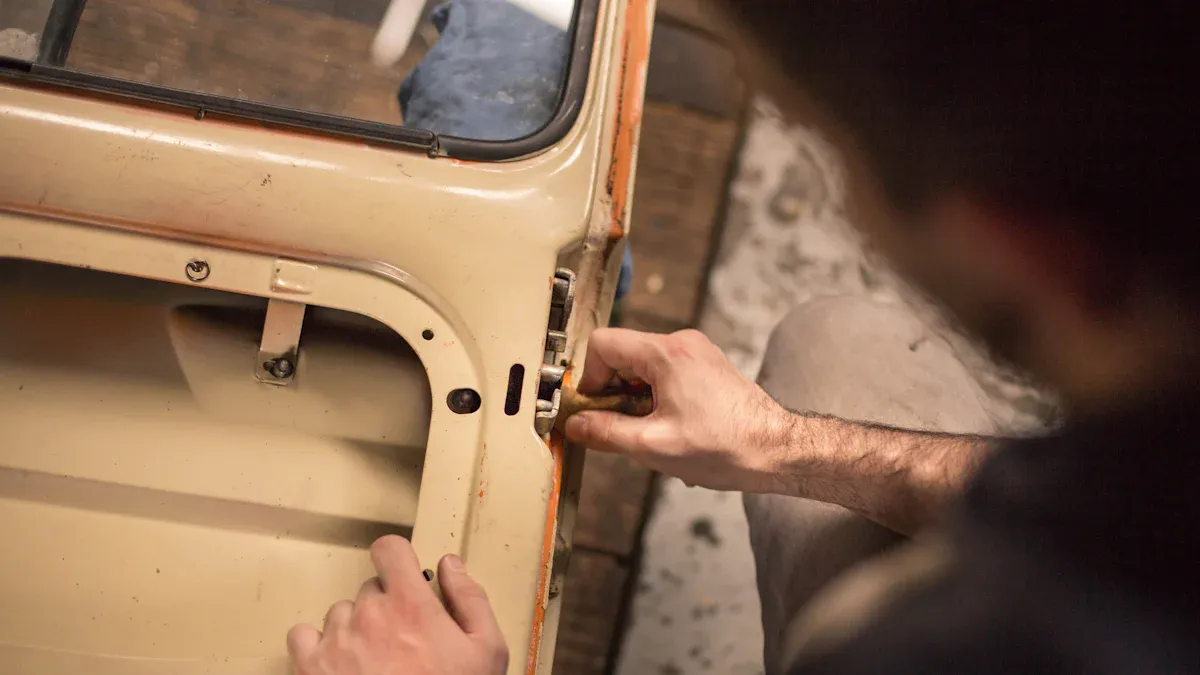
You can solve many car door problems at home with a few simple tools and a little patience. Let’s walk through some easy fixes for common lock issues.
Lubricate Rusted or Stuck Parts
Rust and dirt can make your car door lock or hinges stick. You can fix this with a few steps:
Clean the area first. Use a cloth to wipe away dirt from hinges, gaskets, and the lock.
Spray lubricant on the hinges. Use a toothbrush to spread it if you need more control.
For the lock, put a little lubricant on your key and slide it into the lock. If the lock is frozen, spray directly inside.
Use silicone spray for rubber seals. This keeps them soft and stops sticking.
Wipe away any extra lubricant so dirt does not build up.
Tip: Lubricating your lock and hinges once in a while helps prevent future problems.
Reset or Replace Lock Actuator
If your power lock does not work, the actuator might be the problem. Here’s how you can check and repair it:
Press the power lock switch. Listen for a sound from the lock.
If you hear nothing, the actuator may be broken.
Remove the door panel to reach the actuator.
Unplug the old actuator.
Put in a new actuator and reconnect everything.
You can repair this at home if you feel comfortable with tools. If not, ask a friend or a mechanic for help.
Repair Handles and Cables
Handles and cables can wear out over time. If your handle feels loose or does not open the door, you may need to repair or replace it. Open the door panel and look for any broken or disconnected cables. You can buy a repair kit at most auto stores. Follow the instructions to attach new cables or handles.
Clear Debris from Latch
Dirt and debris can block the latch and make the lock stick. Try these steps:
Use a small brush, like an old toothbrush, to clean the latch.
For tough grime, use a damp cloth, but don’t soak the area.
After cleaning, spray a dry lubricant on the latch and strike plate.
Move the latch back and forth to spread the lubricant.
This quick repair can make your lock work smoothly again.
Release Frozen Seals
Winter can freeze your car door shut. Don’t force it open. Try these safe tricks:
Push gently on the door to break the ice seal.
Use a deicer spray or a mix of vinegar and water.
Pour warm (not hot) water over the lock and door edges.
Heat your key with a lighter before putting it in the lock, but never do this with an electronic key.
Note: Keeping a deicer in your car can save you time on cold mornings.
With these DIY steps, you can repair many car door lock problems yourself and keep your car working well.
When to Call a Mechanic
Signs of Serious Car Door Issues
Sometimes, you just can’t fix a car door problem on your own. You might try every trick, but the door still won’t budge. That’s when you need to think about calling a mechanic or a locksmith. You want your car to be safe and easy to use. If you notice any of these signs, don’t wait too long:
The door sticks or you need to use a lot of force to open or close it.
Windows refuse to roll up or down all the way.
The trunk or hood won’t latch, no matter what you do.
You see gaps between panels that weren’t there before.
Wind noise gets loud while you drive because the seals don’t fit right.
Door seals show visible gaps or start to separate from the frame.
Ice keeps building up on the door, even after you use silicone spray.
Water leaks into your car when it rains or when you wash it.
You hear strange whistling sounds while driving, which means the seals are leaking.
If you spot any of these problems, you should reach out for locksmith services or a trusted mechanic. Sometimes, these issues mean there’s damage you can’t see. You don’t want to risk your safety or get stuck in an emergency.
If you ever feel unsafe or trapped, call for emergency help right away. Your safety comes first.
What to Expect at the Shop
When you bring your car to a mechanic or use locksmith services, you want to know what will happen. The shop will check your car door, locks, and seals. They might use special tools to find the problem. You could see them test the lock, handle, and latch. Sometimes, they’ll take off the door panel to look inside.
You might need a new lock, handle, or actuator. The mechanic or locksmith will tell you what needs fixing. If the problem is with the frame or seals, they’ll explain how to repair it. You can ask questions and get advice about keeping your car safe. Most shops offer emergency repairs if you’re stuck and need help fast.
Here’s what you can expect:
Step | What Happens at the Shop |
|---|---|
Inspection | Mechanic or locksmith checks door |
Diagnosis | Finds the cause of the problem |
Repair or Replace | Fixes or swaps broken parts |
Safety Check | Makes sure everything works safely |
Advice | Gives tips for future prevention |
You don’t have to worry about feeling lost. The mechanic or locksmith will guide you through each step. If you need emergency help, most locksmith services can come to you. You’ll get your car door working again and feel safe on the road.
Preventing Future Car Door Problems
Maintenance Tips
You want your car doors to work smoothly every day. Regular care makes a big difference. Start by cleaning your car often. Dirt and moisture can sneak into the door seals and locks. Wipe down the edges and handles with a soft cloth. Use a silicone-based spray on the door seals. This keeps them soft and stops them from sticking. Park your car in a sheltered spot when you can. Covered parking protects your doors from rain, snow, and harsh sun.
Clean your car frequently to remove moisture and dirt.
Lubricate the door seals with silicone spray.
Park in a sheltered area to avoid weather damage.
Tip: A quick wipe-down after a rainy day helps prevent sticky locks and seals.
Protect Against Rust and Freezing
Rust and ice can cause big problems for car doors. You can stop rust before it starts. Apply a protective wax or ceramic coating to your car doors. This creates a shield against moisture and oxidation. Use light-grade oil on moving parts like handles and hinges. Oil keeps them working and blocks corrosion. In cold weather, frozen doors are common. Spray silicone on the seals before winter hits. This helps keep ice from forming.
Apply wax or ceramic coating for a moisture barrier.
Lubricate handles and hinges with light-grade oil.
Treat seals with silicone spray before winter.
Note: If you live in a snowy area, keep a deicer spray in your glove box.
Check Locks and Handles Regularly
You can catch problems early with a quick check. Open and close each door once a week. Listen for strange sounds or feel for stiffness. Try both the inside and outside handles. Make sure the locks work with your key and your remote. If something feels off, fix it right away. Small repairs now save you from bigger headaches later.
What to Check | How Often | What to Look For |
|---|---|---|
Door seals | Monthly | Cracks, dryness, sticking |
Handles & hinges | Weekly | Stiffness, noise, looseness |
Locks | Weekly | Slow response, sticking |
Callout: Regular checks keep your car doors safe and easy to use.
You can fix most car door problems with a few simple steps. Start by checking if all doors are affected or just one. Listen for actuator sounds and inspect wiring for damage. After repairs, refit door panels, reconnect the battery, and test the locks with your key fob and switches. To prevent future issues, apply lubricant to locks, use weatherproof covers, treat seals with silicone spray, and keep everything dry.
Stay patient and try these easy fixes before calling a pro. You’ve got this! 🚗✨
FAQ
Why won’t my car door open from the inside or outside?
You might have a jammed latch, broken handle, or a faulty lock actuator. Try unlocking with your key fob and physical key. If nothing works, check for visible damage or call a mechanic.
Can I fix a stuck car door myself?
Yes, you can! Start by cleaning and lubricating the lock and hinges. Use a deicer for frozen seals. If the handle or cables look broken, you may need a repair kit. Always work gently.
Tip: If you feel unsure, ask a friend for help or contact a professional.
What should I do if my car door freezes shut?
Spray a deicer or use a mix of vinegar and water on the edges. Push gently to break the ice seal. Never use hot water—it can crack the glass or paint.
How often should I check my car door locks and handles?
Check your locks and handles once a week. Open and close each door. Listen for odd sounds and feel for stiffness. Early checks help you catch problems before they get worse.
Part to Check | How Often | What to Notice |
|---|---|---|
Locks | Weekly | Sticking, slow |
Handles | Weekly | Loose, noisy |
Seals | Monthly | Dryness, cracks |

A skilled Mechanical Engineer with a passion for automotive technology, our writer combines technical expertise with storytelling to craft engaging and insightful automotive content. Fascinated by the latest advancements in vehicles, he enjoys exploring cutting-edge innovations and often sets out on early morning drives to uncover scenic routes and fresh inspiration for his writing.