
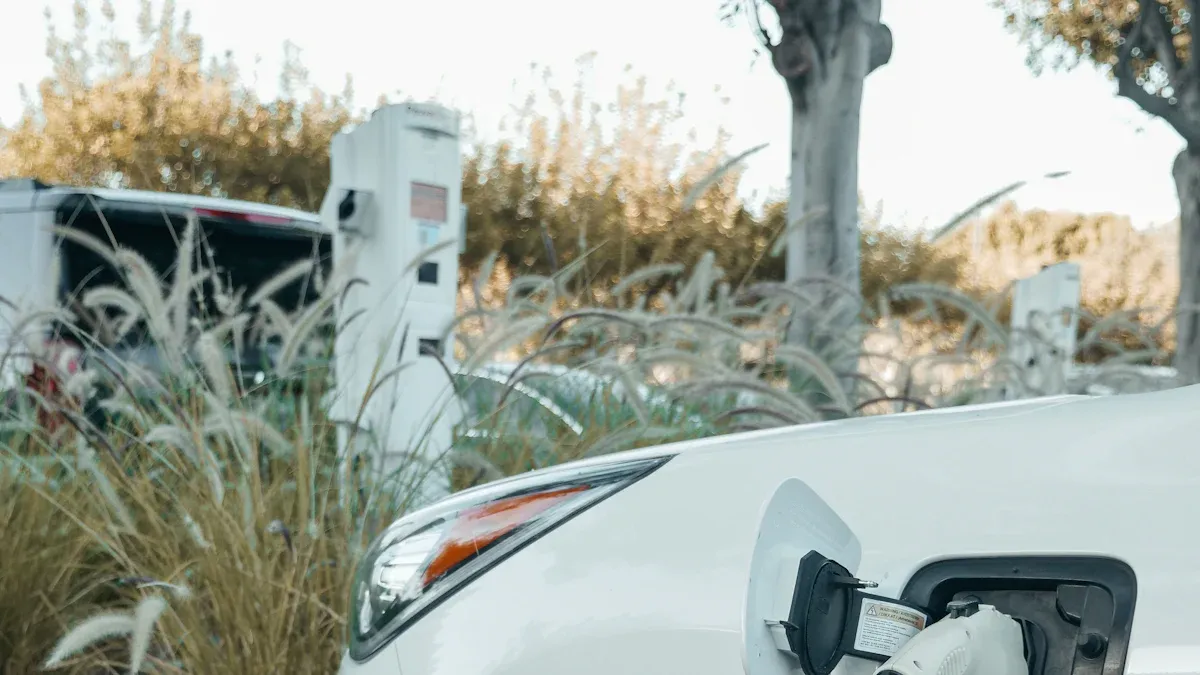
Yes, electric cars have transmissions. They do not work like the ones in gasoline cars. Most electric cars use a single-speed transmission. This helps give power fast when you press the pedal. The system is simple and has fewer moving parts. Look at this table to see how much simpler these transmissions are:
Vehicle Type | Component Count | Maintenance Needs |
|---|---|---|
Electric Vehicles | Fewer moving parts | Almost no liquids to change, less frequent service |
Gasoline Vehicles | Thousands of parts | Routine service required, such as oil changes |
You will find the system easy and reliable. Now, let’s see how these systems work.
Table of Contents
Key Takeaways
Electric cars have single-speed transmissions. This makes them easy and efficient. You get instant power and do not need to change gears.
Electric car transmissions have fewer moving parts. This means less maintenance is needed. Owners spend less time and money fixing them than gasoline cars.
Electric motors give strong torque right away. This helps electric cars speed up quickly. Electric cars feel fast and smooth when you drive them.
Most electric cars do not need regular reverse gears. The electric motor can spin both ways. This gives power in reverse just like going forward.
Some fast electric cars use multi-speed transmissions. This helps them speed up and work better. But most electric cars use single-speed setups.
Do Electric Cars Have Transmissions?
Electric Vehicle Transmission Basics
You might ask if electric cars need transmissions. The answer is yes, but they are not like the ones in gasoline cars. Most electric cars have a single-speed transmission. This works because the electric motor gives strong power at many speeds. You do not have to shift gears to go fast.
Here are the main parts you will see in an electric car transmission:
Many electric cars use just one-speed transmissions.
The electric motor’s wide torque range means no gear changes.
Some cars have simple transmissions to help them work better.
You can check out how these parts fit together in the table below:
Component Type | Description |
|---|---|
Electric Motor | Gives torque at many speeds, so you do not need lots of gears. |
Single-Speed Transmission | Makes things simple and lets power move without gear changes. |
Planetary Gear Sets | Sometimes used to make the car work better and use less energy. |
Gear Reduction Units | Used in some cars to give more torque. |
Direct-Drive Systems | Some electric cars use direct-drive for the best efficiency. |
The transmission helps move energy from the battery to the motor.
It makes sure the car runs smoothly and gives good power.
New designs try to make cars use less energy and weigh less.
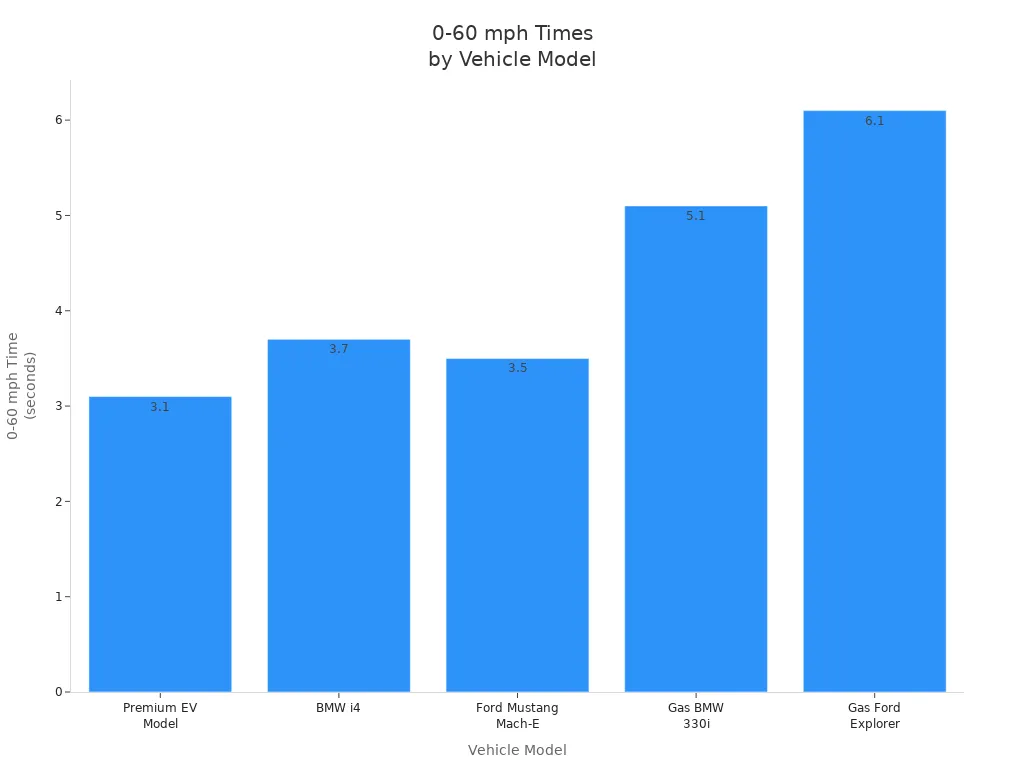
You will see that electric cars feel fast and smooth when you drive them. The single-speed setup lets you speed up right away. For example, some electric cars can go from 0 to 60 mph in just over three seconds. Look at this chart to see how fast electric and gasoline cars can speed up:
Differences from Gasoline Cars
Transmissions in electric cars are not the same as in gasoline cars. You do not need a gearbox with many speeds because the electric motor gives instant torque. Gasoline engines need lots of gears for different speeds and power. Electric cars keep things easy.
Here is a quick comparison:
Vehicle Type | Number of Moving Parts | Key Components |
|---|---|---|
Electric Vehicle (EV) | 20 to 25 | Electric motor, Bearings, Reduction gears |
Internal Combustion Engine (ICE) | 200 to over 2,000 | Pistons, Valves, Camshafts, Crankshafts, Fuel system, Exhaust system, Transmission system, Other mechanical systems |
Electric cars usually have a single-speed transmission, so power is easy to use.
Gasoline cars need transmissions with many speeds to handle engine power.
Electric motors give instant torque, so you do not need lots of gears.
Tip: Electric cars need less fixing because they have fewer moving parts. This means you go to the mechanic less and get to enjoy driving more.
How Electric Car Transmission Works
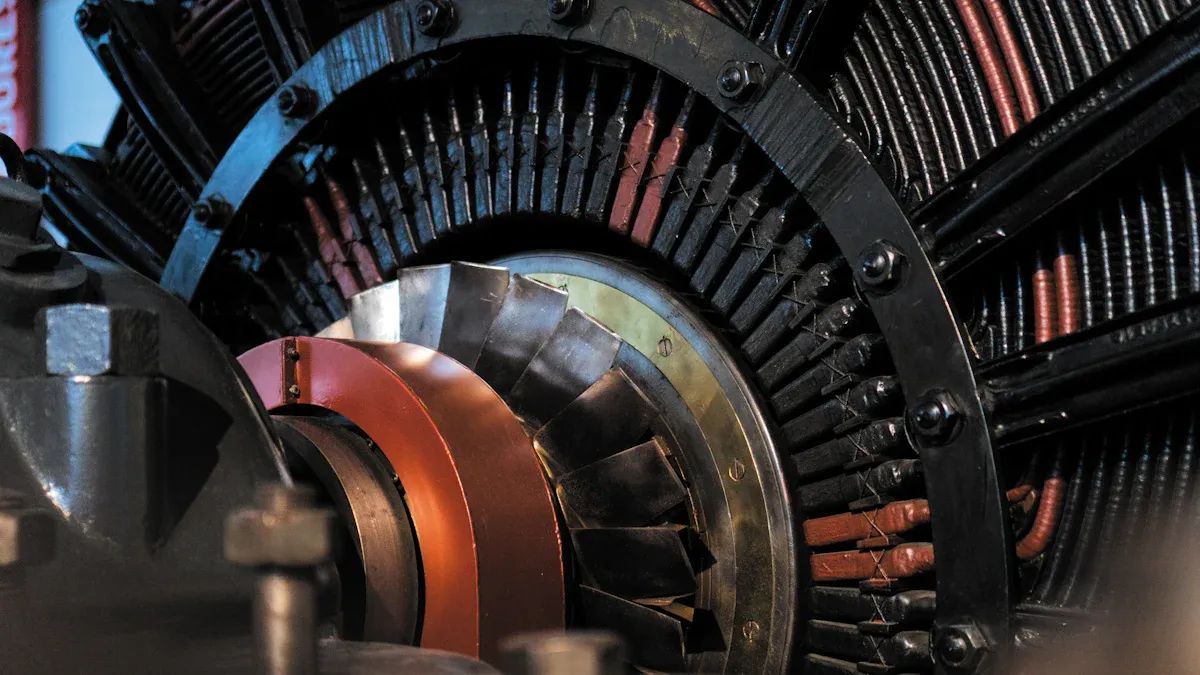
Single-Speed Gearbox in Electric Cars
When you drive an electric vehicle, you notice how smooth and quick it feels. This happens because most electric cars use a single-speed gearbox. You do not need to shift gears or press a clutch. The system works in a simple way:
The gearbox has only one gear, so you do not have to think about changing gears.
The electric motor gives you instant power and torque, so you can speed up fast.
The setup works like an automatic transmission, but with fewer parts and no gear shifting.
You get immediate power when you press the pedal. The single-speed transmission sends energy from the motor to the wheels without delay. This design helps you reach top speeds quickly and makes driving easy.
Here is a table that shows how the single-speed transmission helps with power delivery:
Feature | Explanation |
|---|---|
Single-speed transmission | Electric motors give a steady flow of power, so you get instant acceleration. |
Electronic control unit (ECU) | The ECU controls the motor, making your ride smooth and stopping jerky movements. |
Simple design | Fewer parts mean less wear and tear, which helps you get reliable and fast power every time. |
Most electric cars do not need a traditional reverse gear. The electric motor can spin in both directions. When you want to go backward, the motor simply turns the other way. This means you do not need extra gears for reversing. You get the same strong power in reverse as you do going forward.
Electric motors give you full torque from zero speed, so you do not need many gears.
You never have to worry about stalling, even when starting from a stop.
The motor works well at all speeds, so a simple fixed-ratio gear is enough for most driving.
The design keeps things light and efficient.
Maintenance-Free Transmission Features
You will find that electric car transmission systems need very little care. The design is simple and strong. You do not have to worry about many moving parts wearing out. Here is a table that explains why these transmissions are mostly maintenance-free:
Feature | Explanation |
|---|---|
The system uses fewer parts than gasoline car transmissions. | |
Fewer moving parts | Less wear means you do not need to fix things as often. |
Single-speed setup | No clutches, belts, or shifting parts to break down. |
Reduced fluid usage | You do not need to check or change fluids as much. |
Lower heat generation | The system stays cooler, so you avoid overheating problems. |
Consistent performance | The car runs smoothly, and you do not get sudden breakdowns. |
Overall lower maintenance costs | You spend less money and time on repairs for your electric car transmission. |
You get a reliable and easy-to-own vehicle. The simple design means you can drive more and worry less about repairs. Most owners enjoy lower costs and fewer trips to the shop. This makes electric cars a smart choice for drivers who want less hassle and more time on the road.
Benefits of Electric Car Transmission
Simplicity and Reliability
Electric car transmissions are known for being simple. They have fewer moving parts than gasoline cars. This makes them less likely to break down. The system works well and lasts a long time.
Here is a table that shows the main benefits of a single-speed transmission:
Benefit | Description |
|---|---|
Simplicity | Fewer moving parts lead to lower maintenance needs and reduced operational costs. |
Efficiency | Enhanced energy usage due to the elimination of complex transmission systems. |
Performance | Instant torque delivery allows for smooth acceleration without gear changes, improving driving experience. |
You can count on your electric car to start up. Studies say electric cars break down about 4.2 times for every 1,000 cars. Gasoline cars break down more than twice as much. Most problems come from the 12-volt battery, not the transmission. The simple drivetrain helps you avoid problems like worn pistons or valves in gasoline engines.
Tip: If your car has fewer parts, there is less to fix. You get to drive more and spend less time at the shop.
Efficiency and Low Maintenance
Electric car transmissions help you save energy and money. The single-speed gearbox means less energy is wasted. The car is lighter, so you can drive farther on one charge.
Electric vehicles have only 20 to 25 moving parts in the drivetrain.
You do not need oil changes, spark plug replacements, or exhaust repairs.
The focus on efficiency and durability means you visit the mechanic less often.
A single-speed transmission helps your car use less energy at high speeds. For example, when you drive from 100 to 180 km/h, the motor’s efficiency drops only a little. Energy loss goes up by less than three times. You still use up to 3.6% less energy. This means you can take longer trips without wasting power.
You also help the environment. Electric cars do not make tailpipe emissions. This keeps the air in your city cleaner. If you charge your car with renewable energy, you help even more.
Multi-Speed Transmissions in Electric Cars
Exceptions in Electric Vehicle Design
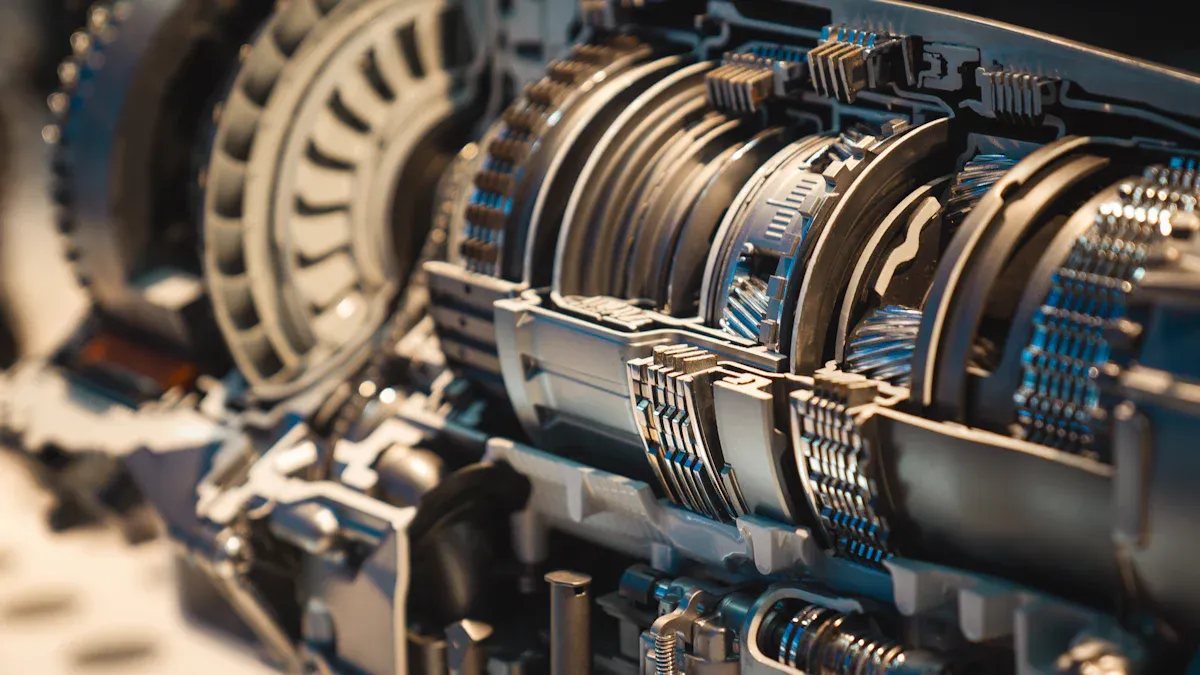
Most electric cars use single-speed transmissions. But some high-performance cars use more than one speed. These special cars can go faster and use energy better at high speeds. For example, the Porsche Taycan and some new Mercedes cars have two-speed transmissions. Lucid Motors uses its own technology to get more range and power.
Here is a table showing some electric cars with multi-speed transmissions and why they use them:
Electric Vehicle Model | Reason for Multi-Speed Transmission |
|---|---|
Porsche Taycan | Enhanced acceleration and efficiency |
Future Mercedes Models | Improved performance and range |
Lucid Motors | Patented technology for efficiency |
These cars are made for speed and long trips. The first Tesla Roadster also had a two-speed transmission in 2008. Today, the Porsche Taycan Turbo and Audi e-tron GT use two-speed systems too. These designs show that multi-speed transmissions help electric cars in special situations.
Studies say two-speed gearboxes can save about 6.6% energy and give about 7% more driving range. Some tests found that two-speed systems can make the range better by up to 8.5%. Three-speed setups can save even more energy than single-speed ones.
Note: Multi-speed transmissions help electric motors work at their best. This saves energy and gives more range.
Why Single-Speed Is Preferred
Most electric cars use single-speed transmissions for good reasons. Electric motors give strong torque right away, even from a stop. This means you can speed up fast without shifting gears. The motor works well at many speeds, so you do not need extra gears to keep the car smooth.
Here is a table comparing electric motors and gasoline engines:
Feature | Electric Motors | Internal Combustion Engines |
|---|---|---|
Torque Delivery | High torque from zero RPM | Limited torque range |
Efficiency Range | Wide RPM range | Narrow RPM range |
Gear Requirement | No need for many gears | Needs many gears |
Shifting | No interruptions | Shifting causes jolts |
You get a smoother ride because there are no gear changes. The single-speed setup also makes the car lighter and cheaper to build. Electric motors reach full torque in less than 0.1 seconds, so you feel instant power. Car makers pick single-speed transmissions to keep things simple, reliable, and efficient.
Tip: With fewer moving parts, you spend less time and money fixing your car. You also get a quieter and more comfortable ride.
Most electric cars have single-speed transmissions. This means they can speed up fast and use energy well. There are not many parts that can break. Electric motors are very good at using energy. They work at about 95% efficiency. Gasoline engines only reach about 35%. You do not need to fix your car as much. The ride feels smoother and nicer.
Feature | Electric Cars | Gasoline Cars |
|---|---|---|
Transmission Type | Direct drive | Multi-speed gearbox |
Efficiency | 95% | 35% |
Moving Parts | About 20 | Over 2,000 |
You get power right away when you press the pedal. You do not need to worry about fixing things often. Electric car transmissions help you drive with less trouble.
FAQ
Do you need to shift gears in an electric car?
You do not need to shift gears in most electric cars. The single-speed transmission handles all speeds. You press the pedal, and the car moves smoothly. You get instant power without gear changes.
How often do you service an electric car transmission?
You rarely need to service an electric car transmission. The design uses fewer moving parts. You avoid regular fluid changes and gear repairs. Most owners visit the shop less often than with gasoline cars.
Can electric cars go in reverse without a reverse gear?
Yes, you can drive an electric car in reverse without a special gear. The motor simply spins backward. You get the same strong power when you back up as when you drive forward.
Are multi-speed transmissions better for electric cars?
Multi-speed transmissions help some high-performance electric cars. You get better acceleration and range at high speeds. Most electric cars use single-speed transmissions for simplicity and reliability.
What makes electric car transmissions more efficient?
Electric car transmissions use direct drive and fewer moving parts. You lose less energy as heat. The motor gives you high efficiency at many speeds. You save energy and drive farther on each charge.

A skilled Mechanical Engineer with a passion for automotive technology, our writer combines technical expertise with storytelling to craft engaging and insightful automotive content. Fascinated by the latest advancements in vehicles, he enjoys exploring cutting-edge innovations and often sets out on early morning drives to uncover scenic routes and fresh inspiration for his writing.